Walking on Water
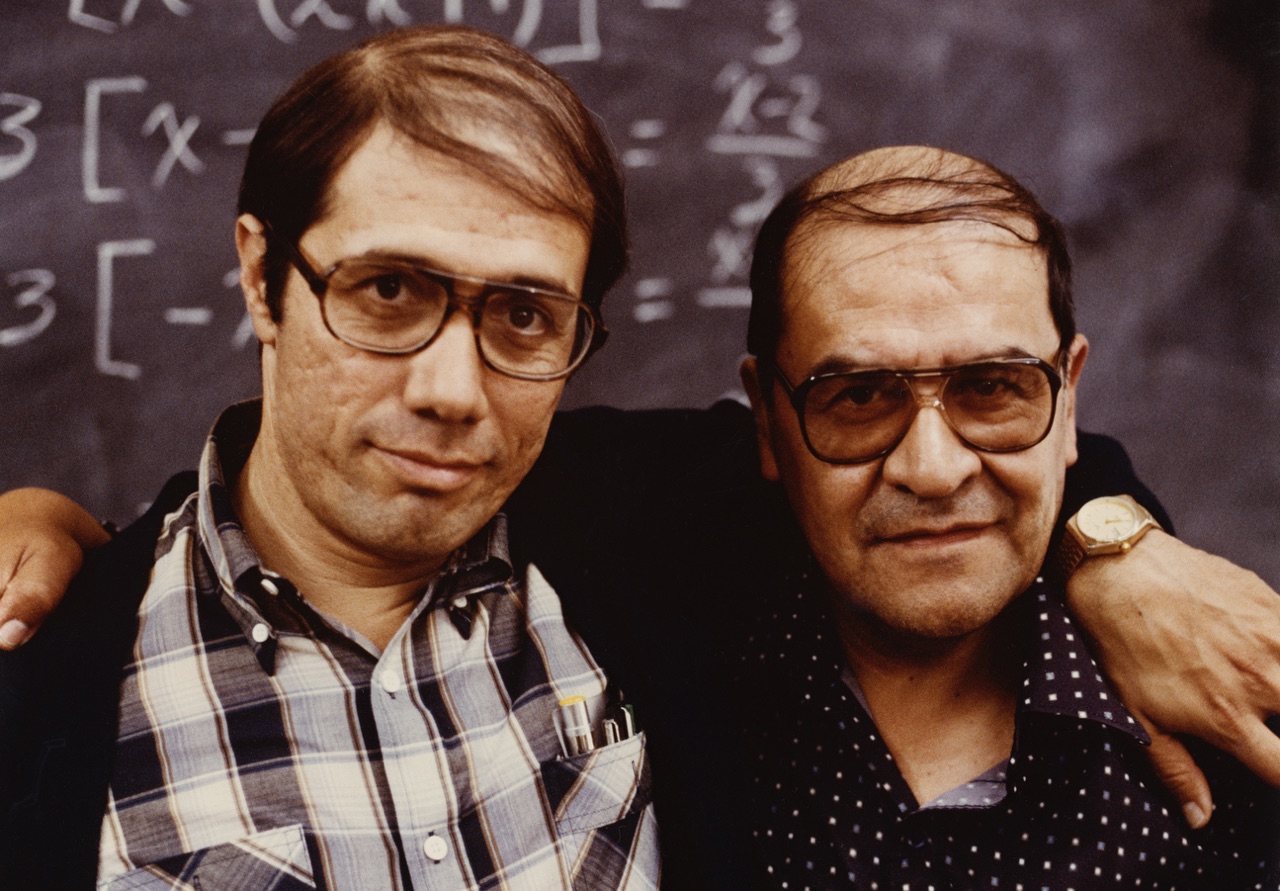
Just over 40 years ago, in the summer of 1986, lightning struck sending my career trajectory into the major leagues. For the past months, I had been working with producer’s rep Jeff Dowd. By mid-June, I was at my wit’s end with The Dude. I know some of you are likely into the whole brevity thing, but this story is kind of classic.
I had known Jeff for about three years beginning in 1983 when I was working with actor Edward James Olmos on the marketing of Bob Young and Moctesuma Esparza’s The Ballad of Gregorio Cortez. Eddie, Tommy Bower and our band of renegades, The Cortez Gang, had modeled our grassroots release campaign strategy on some of the ideas Jeff had fomented up in Seattle while he was doing marketing for the Seven Gables Theatres. Eddie, Bob and Tommy had first met Jeff in 1981, up at Robert Redford’s retreat in Utah during the Sundance Institute’s very first summer lab – where Cortez had essentially been put together. Lapsing forward a few years, I had finished working as Bob’s assistant on his film Extremities and Jeff hired me early in 1986 to join his one-man shop.
At that time, Jeff had carved out a niche for himself as a very high-profile producer’s rep. He had worked with Joel and Ethan Coen on Blood Simple during the same era when we were releasing Cortez. Joel and Ethan subsequently modeled their character Jeffrey Lebowski on Dowd ...who self-styled himself as the Dude. Whether or not he actually participated in reworking a 2nd draft of the Port Huron statement is anyone’s guess. Jeff definitely liked his white Russians, and that sweater was authentic. Jeff Bridges nailed his louche rendition of “the Dude” brilliantly. Well before The Big Lebowski, and after a few months of putting up with Dowd’s bluff and bluster, the blush was off our working relationship. As I packed-up my desk before departing his employ I found a script I had been given months before by a young woman we hired for a few weeks to lighten the workload. Before she left, she handed me the script and surreptitiously told me, “This is for you.” Not thinking much about it at the time, I simply tossed it into a desk drawer.
A few days after departing the Dude’s employ, I read the script. It was entitled Walking on Water. I hated that title, but the story and the lead character were really compelling. It was set in Boyle Heights, at Garfield High School. (As it happened, my family, on both sides, had lived in Boyle Heights after moving west from New York City, after emigrating from Poland and what now is Ukraine. My dad attended Roosevelt HS in the 1920s – Garfield’s rival.) The screenplay depicted a group of inner-city Latino kids who had aced the AP Calculus exam only to be falsely accused of having cheated. Their only defense was to retake the test, with three days to prepare. Of course, we now know that film as Stand and Deliver.
Since working with Eddie and Tommy, we had been looking for another project to apply what we had learned from marketing Cortez. I knew by my gut reaction, this screenplay was it. A few days after reading the script I contacted the film’s producer, Tom Musca. He lived about seven blocks from me in Santa Monica just below Montana Avenue. I made my spiel on the phone and he invited me over to his apartment where I proceeded to explain that I felt his was a project that could be positioned differently than simply making a broadcast film for PBS’s flagship indie studio, American Playhouse – that the film could take fuller advantage of the wave of great Latino stories being produced or developed at that moment.
Tom was very polite but basically rather dismissive, if memory serves. He and his partner, director Ramon Menendez had secured the rights and nurtured their project that was supposed to be shot later that fall. Their ideas were pretty much set, but they had yet to cast the lead role, and while they were aware of Eddie’s rising prominence in the industry, my marketing pitch sort of fell on deaf ears ...until, that is, the following Sunday when they read the June 22nd cover story in the L.A. Times Sunday Magazine that featured Eddie on the cover. In the article, which, as it happened, I had nurtured for two years, the journalist, Jeff Meyers, discussed in great depth our experiences while marketing Cortez. That article caught Tom and Ramon’s attention in a way my pitch didn’t or couldn’t. It validated everything I had presented to Tom.
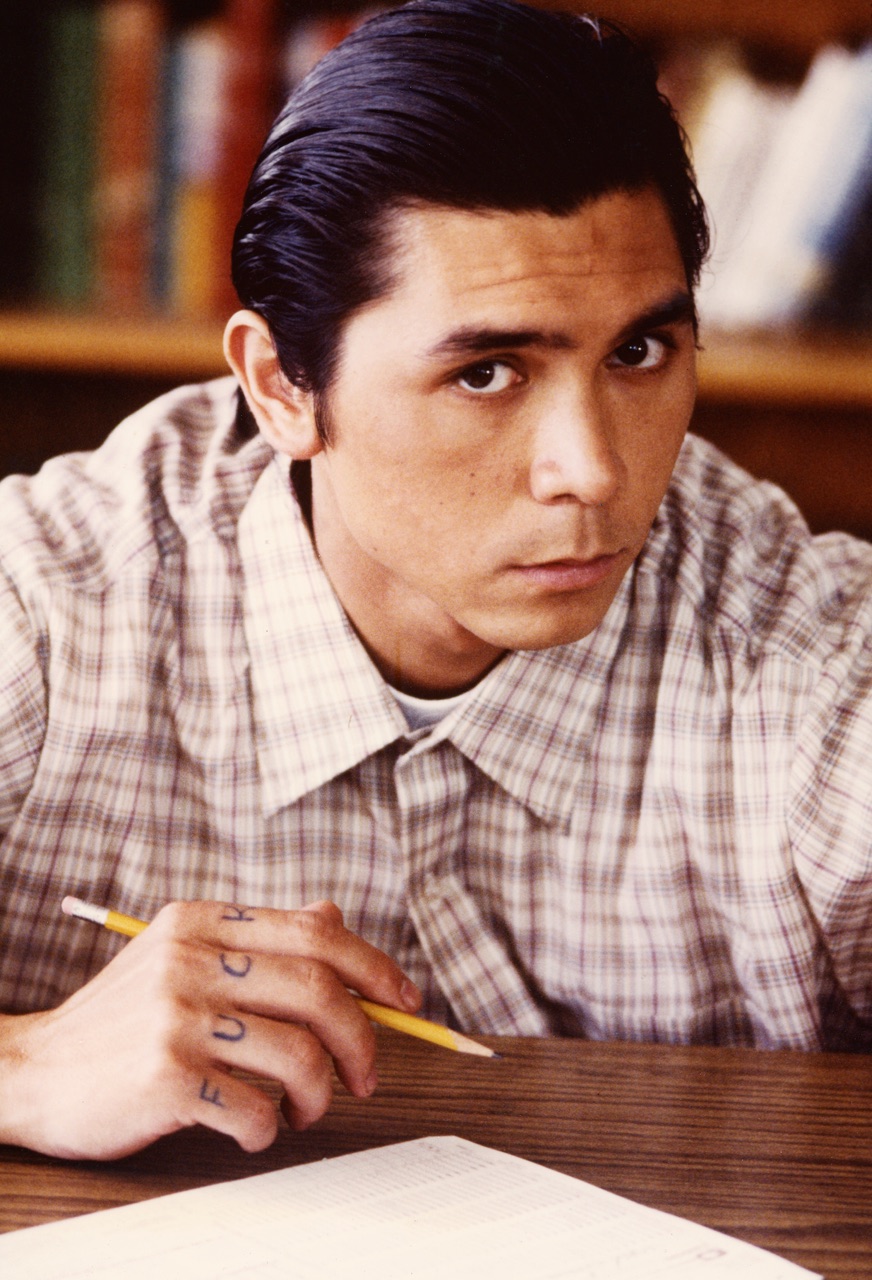
The following day, I got a call from Tom asking that I come back over to go through it again – this time with Ramon’s presence. I did so, and they responded with a totally different attitude. Eddie being the third lead in the hottest show on television, Miami Vice, didn’t hurt. They had already secured the commitment of Lou Diamond Phillips, before La Bamba came out; Andy Garcia, before The Untouchables came out; and Rosanna DeSoto, who worked with Eddie and Bob on Cortez. Tom and Ramon were clearly really smart guys, graduates of UCLA’s School of Theatre, Film and Television – which both Eddie and I were very close with. And, whereas, they had envisioned the project’s scale as being correctly aligned with the PBS market, they could imagine how their project could benefit from the upcoming Latino-themed films nearing release or going into production as theatrical feature projects. Redford and Moctesuma were also readying The Milagro Beanfield War.
Finally, Tom and Ramon embraced my pitch about Eddie playing teacher Jaime Escalante, and after some negotiating they came to agreement with the caveat that they delay principal photography until Eddie finished the season of playing Lieutenant Castillo for producer Michael Mann. Eddie’s wife, Kaija, insisted they wait ...they weren’t going to pass-up the “fuck you” money they’d get for another season of Miami Vice.
The film was shot in the spring of 1987 and premiered at Mill Valley the following October, two showings that lit the fuse to a heated bidding war by the studios that played out over the following two weeks. That bidding war was legendary, a battle won by Warner Bros’ executive Barry Reardon, their head of Distribution.
Like many whose careers were catapulted into the Hollywood mainstream from that decade of the 1980s, when “indie” production came into its own, my trajectory landed me at Warner Bros and led directly to working on films like Driving Miss Daisy. There’s so much more to the film’s legacy that I’ll share in future posts.